
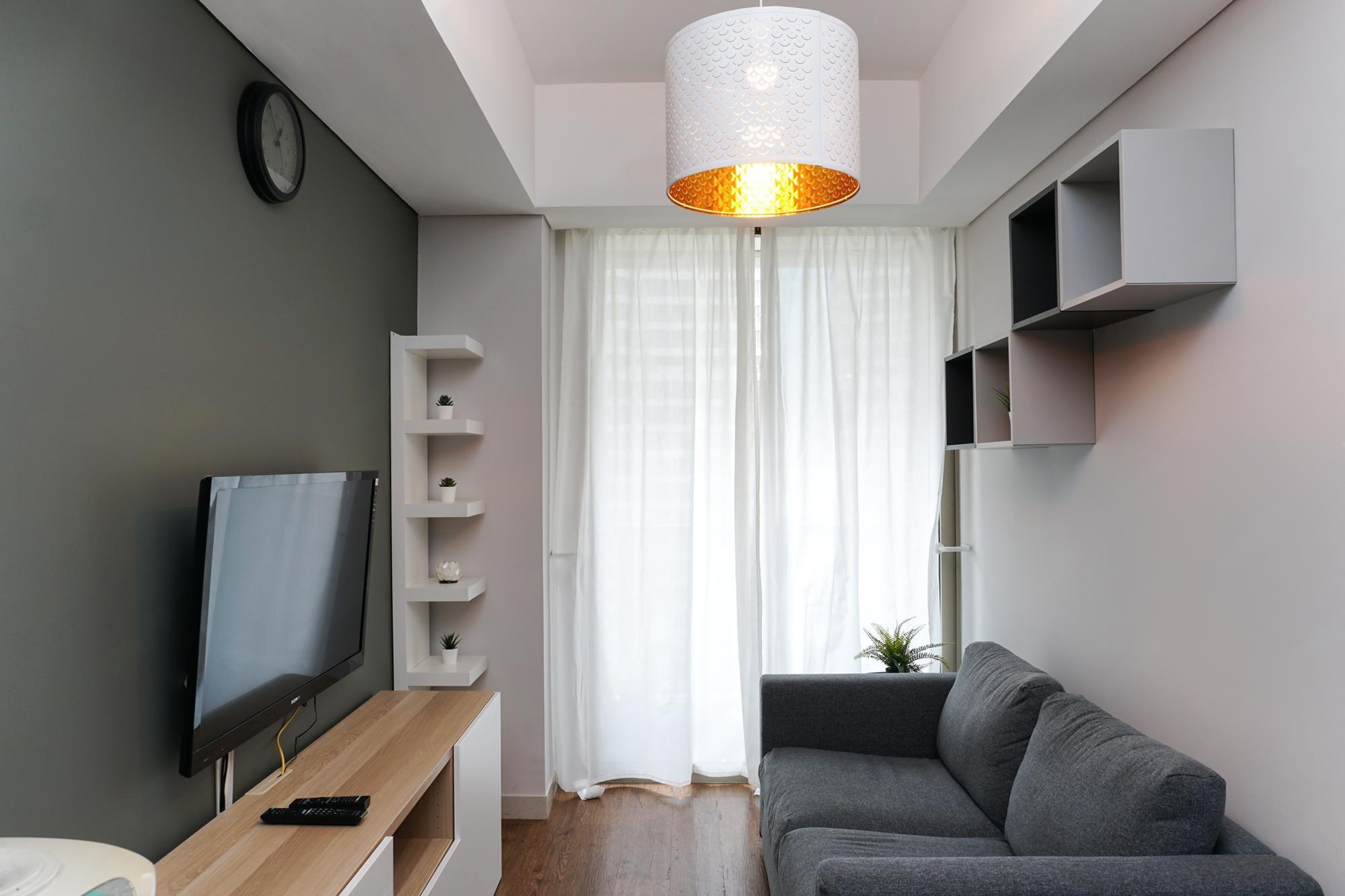
Maximizing a Small Space
Living in a small space doesn’t mean you have to sacrifice style or comfort. In fact, some of the most creative and cozy interiors are found in compact homes. The key is to shift your mindset from simply filling a room to strategically curating it.
As an interior designer, I help clients transform their limited square footage into highly functional and beautiful sanctuaries. Forget the feeling of being cramped—let’s unlock the potential of your small space with these fundamental design principles.
1. Embrace Light and Bright Colors (But Don’t Be Afraid of Depth)
You’ve likely heard the classic advice: “Paint everything white to make a room look bigger.” This is a great starting point, but it’s not the whole story.
- The Power of Light Hues: Light colors like soft whites, pale grays, and gentle pastels reflect light, making walls feel further away. Using a monochromatic or analogous color scheme throughout the space creates a seamless flow that enlarges the visual footprint.
- Strategic Use of Dark Colors: A common misconception is that dark colors always shrink a room. In reality, a deep navy or charcoal on a single accent wall, or in a recessed nook, can add surprising depth and drama, making the room feel more expansive.
2. Choose Multi-Functional and Scalable Furniture
Every piece in a small space must earn its keep. Bulkiness is the enemy of flow.
- The Double-Duty Rule: Look for furniture that serves more than one purpose. A storage ottoman provides seating and hides blankets. A sofa bed accommodates overnight guests. A console table can double as a desk.
- Scale is Everything: Avoid overstuffed, large-scale furniture. Opt for pieces with exposed legs (sofa, armchairs, tables) that allow light to pass underneath, creating a sense of airiness. A small-scale apartment-sized sofa is often a better fit than a massive sectional.
3. Master the Art of Vertical Storage
When floor space is limited, look up! Your walls are valuable real estate.
- Float Your Furniture: Install floating shelves and wall-mounted cabinets to keep the floor clear. This draws the eye upward and makes the ceiling feel higher.
- Go Tall: Use tall, slender bookcases or storage units. They provide ample storage without consuming much floor space, emphasizing verticality.
4. Let There Be (Layered) Light
A single overhead light can create harsh shadows and make a room feel small and flat. Layered lighting is the secret to adding dimension.
- Ambient Lighting: This is your general illumination (e.g., recessed lights, a central fixture).
- Task Lighting: This is focused light for specific activities (e.g., a floor lamp for reading, under-cabinet lights in the kitchen).
- Accent Lighting: This adds drama and depth (e.g., a picture light over art, LED strips on a shelf). By combining these layers, you create pools of light that make the room feel larger and more dynamic.
5. Reflect and Connect
Strategic use of mirrors is one of the oldest and most effective tricks in the book.
Create Continuity: Use consistent flooring throughout the entire home. Switching from tile to wood to carpet visually chops up the space, while a continuous floor material creates a smooth, flowing expanse.
Placement is Key: Position a large mirror opposite a window to double the amount of natural light and the outdoor view, instantly making the room feel twice as large.